.svg)

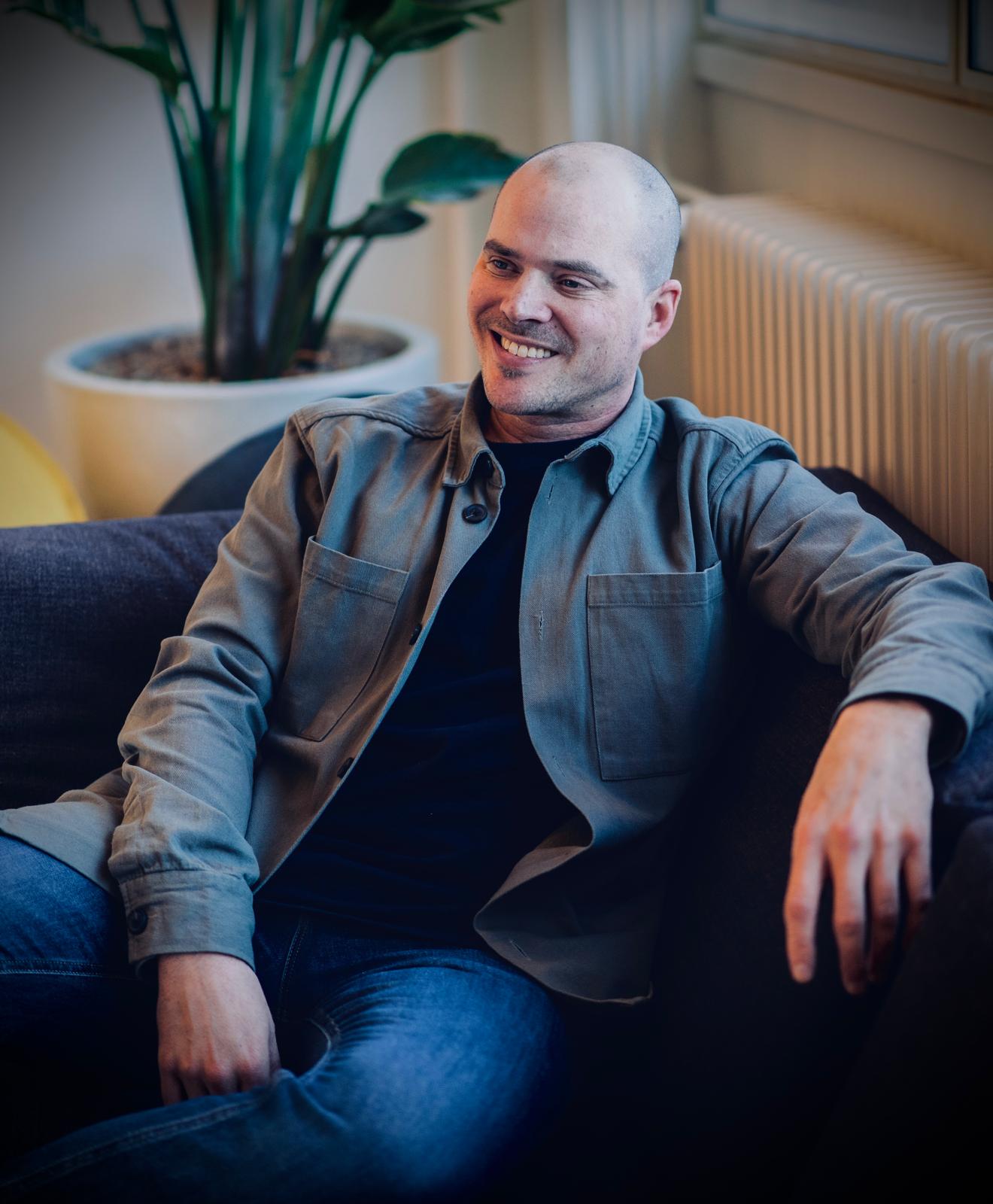
Recently, I sat in a coffee shop in the Meent in Rotterdam. Mid-September, sunny afternoon. A man, aged about forty, sat at the table next to me, with a phone to his ear. “No,” I heard him say. “No, that's not going to work for Sinterklaas. But what I can do...”
He listened. Nodded. Took something down.
I thought: that's where it starts again. The time of year when everyone who works in commerce puts their best foot forward.
The November Story
November is the month to see how commerce really works. Not the story of the annual report or the investor presentation, but the daily work. From people who come up with solutions, take phone calls and try to make sure that promises that have been made come true.
A friend of mine is at various markets selling vintage products and her own illustrations. Last year, one evening in November, she visited a customer. Personally. A woman had bought a print at the market, found out at home that it had a small crack, and had sent a message via WhatsApp.
“I could say she could take it back to the next market,” she said later. “But I found it so annoying that I just wanted to bring a new one to her.”
The customer lived in Delft. My girlfriend in Berkel en Rodenrijs. Twenty minute drive.
“And?” I asked.
“She was perplexed,” she said. “Really stunned that I did that. She wanted to give me money for the gas. We chatted on the sidewalk for another ten minutes.”
That story stays with me. Not because it's beautiful or inspiring. But because it shows what happens when you take the space to solve things personally, even though systems say things have to be done differently.
What numbers don't tell
The Dutch e-commerce market stands at 36.5 billion euros. Grows to 47 billion by 2030. B2B grows by 10.5 percent per year. Harder than B2C.
Those figures are in reports. They come back in presentations. They are true.
But they don't tell the story of that guy in the coffee shop. Or from my girlfriend who drove to Delft. Or the thousands of people who will try to make sure that the promises their systems make actually come true in the coming weeks.
Black Friday starts in a few weeks. Then Santa Claus. Then Christmas. For those who work in commerce, that means: everything that normally runs smoothly should now run even better. And that requires creativity.
Someone at the wheel
I spoke to someone who has been working in digital commerce for over twenty years. Started as a startup, now a leading brand. He has experienced the whole development.
“The same story every November,” he said. “We build systems that work great all year round. But in November, you suddenly see where the weak spots are. A customer who calls because the mobile checkout crashes. A partner who asks why the stock is wrong. Small things that are not normally a problem, but are now.”
I asked what makes the difference then.
“Speed,” he said. “And honesty. If you call back within an hour with “this is the problem, this is what we're going to do about it”, people accept that. It's not about perfection. It's about showing that someone is driving.”
That someone is driving. That's what it's about.
Not about the dashboards or the automation or the AI features that make it to the presentations. But because of the feeling that there is someone who keeps an eye on it and can make adjustments if necessary.
Where it goes wrong
PostNL reported that 2.5 million customers set their delivery preferences. Eighty-four percent follow packages. Tracking increases satisfaction by thirty percent.
Those are good numbers. Really. They show that people want control. Knowing where your package is is worth more than promising it will arrive tomorrow.
But they also say something else.
They say that we've built systems that have become so complex that people want to know what's happening. Not because they are curious. But because they no longer trust the systems.
PwC research: nine out of ten business leaders think customers trust their company. Three out of ten customers actually do that.
Sixty percentage points difference. That is not a measurement error. That is a gap.
Sarah's Story
I know someone who works at Picnic. I conveniently call her Sarah, that's not her real name, but it does sound a lot better than “someone I know who works at Picnic.” She is Hub Growth Manager. Last year, she told me about December.
“Do you know what the hard part is?” she said. “People order groceries for Sinterklaas Eve. Specific stuff. Peppernuts, gingerbread, gifts. If the delivery person is late or forgets something, it's not just a missed delivery, a child is waiting.”
I asked how she deals with that.
“We have protocols,” she said. “But those protocols don't always work. Sometimes you just have to call. Sometimes you have to call a delivery person who is already on the way. Sometimes it means getting in the car yourself.”
“There were two things I could do,” she said. “Explaining that it was a system error and that we had done our best. Or make sure those peppernuts arrived.”
She made sure the peppernuts arrived.
“Do you know what's crazy?” she said. “That customer is now ordering from us even more faithfully. And we also see that in the figures for that neighborhood; more new customers, more repeat orders. Not because our system is so good, but because people know that if things go wrong, we'll fix it.”
What that means
McKinsey reported that more than half of major European companies use AI. Investments are being made in chatbots, personalization and predictive analytics.
Fine. Really. Technology helps.
But it doesn't solve this: people no longer trust systems because systems too often promise things that don't happen.
The solution isn't just better technology. The solution is honesty about what technology can and cannot do.
The platform story
Last year, an entrepreneur told me about his webshop. Good running. Substantial turnover via Bol.com and its own site. He was happy with how it went.
Until November. Bol.com changed something in their search algorithm. His products suddenly appeared lower in results. His turnover via the platform fell by forty percent in two weeks.
“I didn't want to leave,” he said. “A large number of my customers find me there, but then I realized: if they decide to increase the commission or change the rules tomorrow, there's nothing I can do about it. I didn't have a buffer.”
He started investing more in his own channels. Newsletter, Instagram, direct customer relationships. “Not to leave Bol,” he said. “But not to be completely dependent.”
From Eurostat: seventy percent of European SMEs depend on one major platform for core functions.
That's not because entrepreneurs are stupid. It's because platforms promise what everyone wants: fast access, proven technology, built-in reach.
The problem comes later. When the rules change. When you discover that the relationship with your customer is actually a “platform relationship”.
The question that lingers
Harvard Business Review found that customers with an emotional connection are four times more loyal. Spend up to fifty percent more.
But how do you build a relationship when there are many contact points via platforms? If customers know your brand, but the relationship partly goes through an intermediary?
What you can do
In the coming weeks, we will write more about this theme. About how people make decisions during the holidays. About what happens in those warehouses and distribution centers when everyone needs something at the same time. About why mobile commerce isn't working the way we think it does. And about why companies that are already thinking about January will soon have an advantage over companies that only start thinking in December.
But let me end where I started. At that coffee shop in the Meent.
That man at that table, that phone, that “no, that's not going to work for Sinterklaas, but what I can do...”
I don't know what happened next. Whether he fixed it. Or the customer understood why it wasn't possible. Whether there is a system somewhere that is now doing a little better.
What I do know: someone is somewhere who promised it. A system, a website, an automated mail. And now this guy has to explain why that promise isn't true.
That's the real story of November and December. Not the growth rates or technology updates. But the tension between what we promise and what we can deliver.
The busiest months are starting now. Not with better systems. But with honesty about what those systems can and cannot do. With people who give their mobile number when necessary. With the courage to drive to Delft when things went wrong.
Because at the end of the day, people don't buy from systems. They buy from people. And if your system promises what your people can't deliver, you have a problem that no technology solves.